
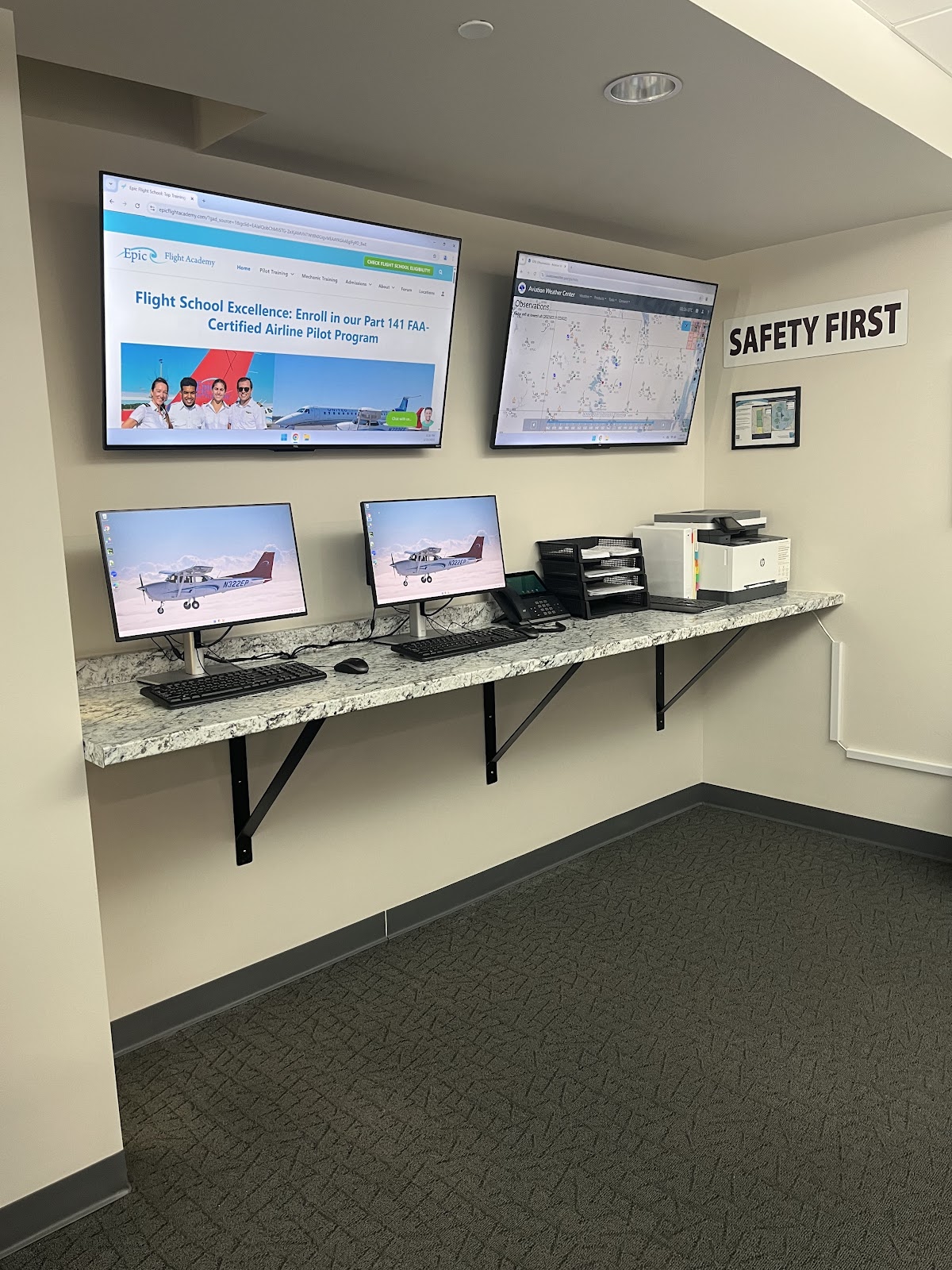
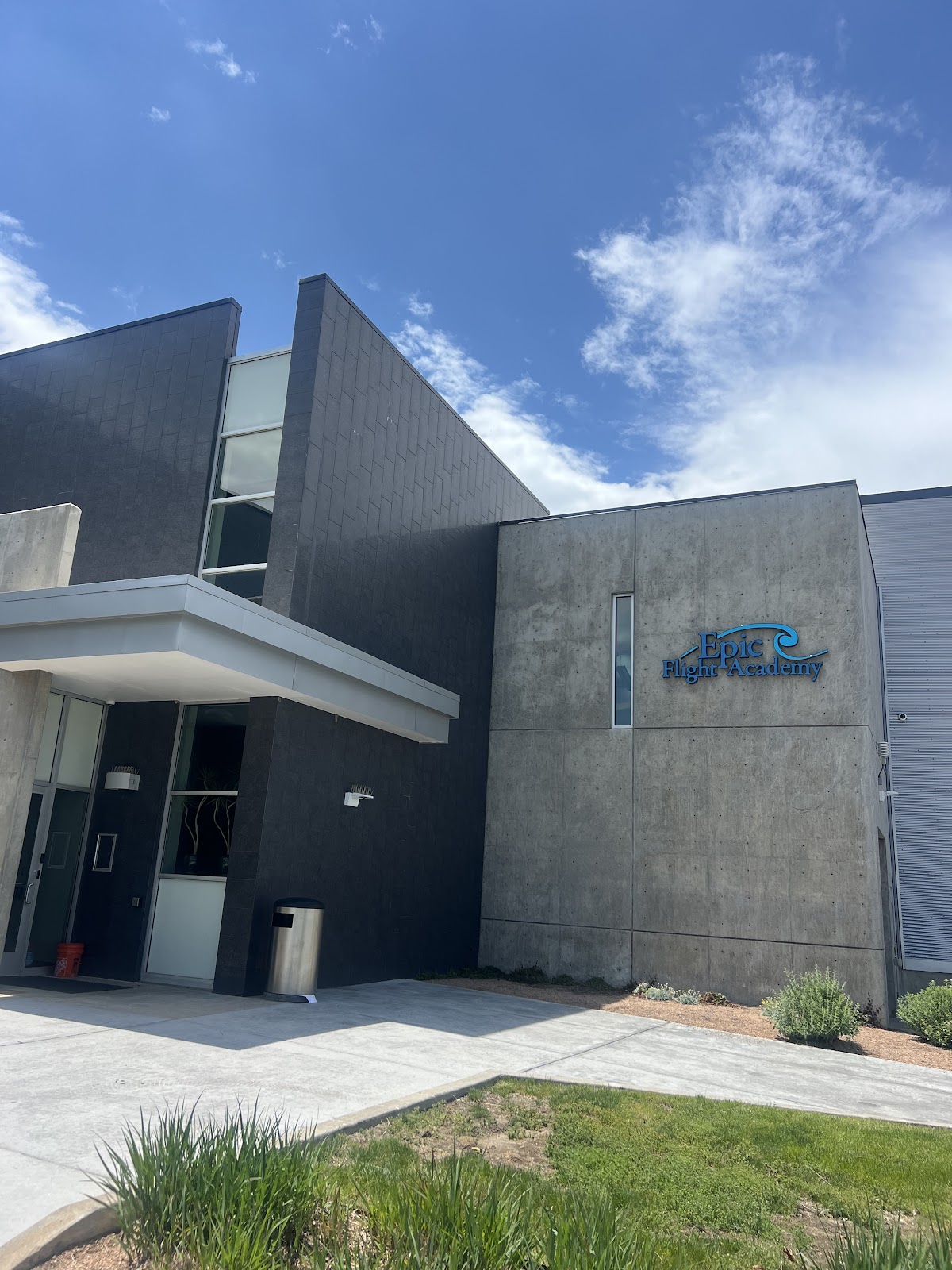
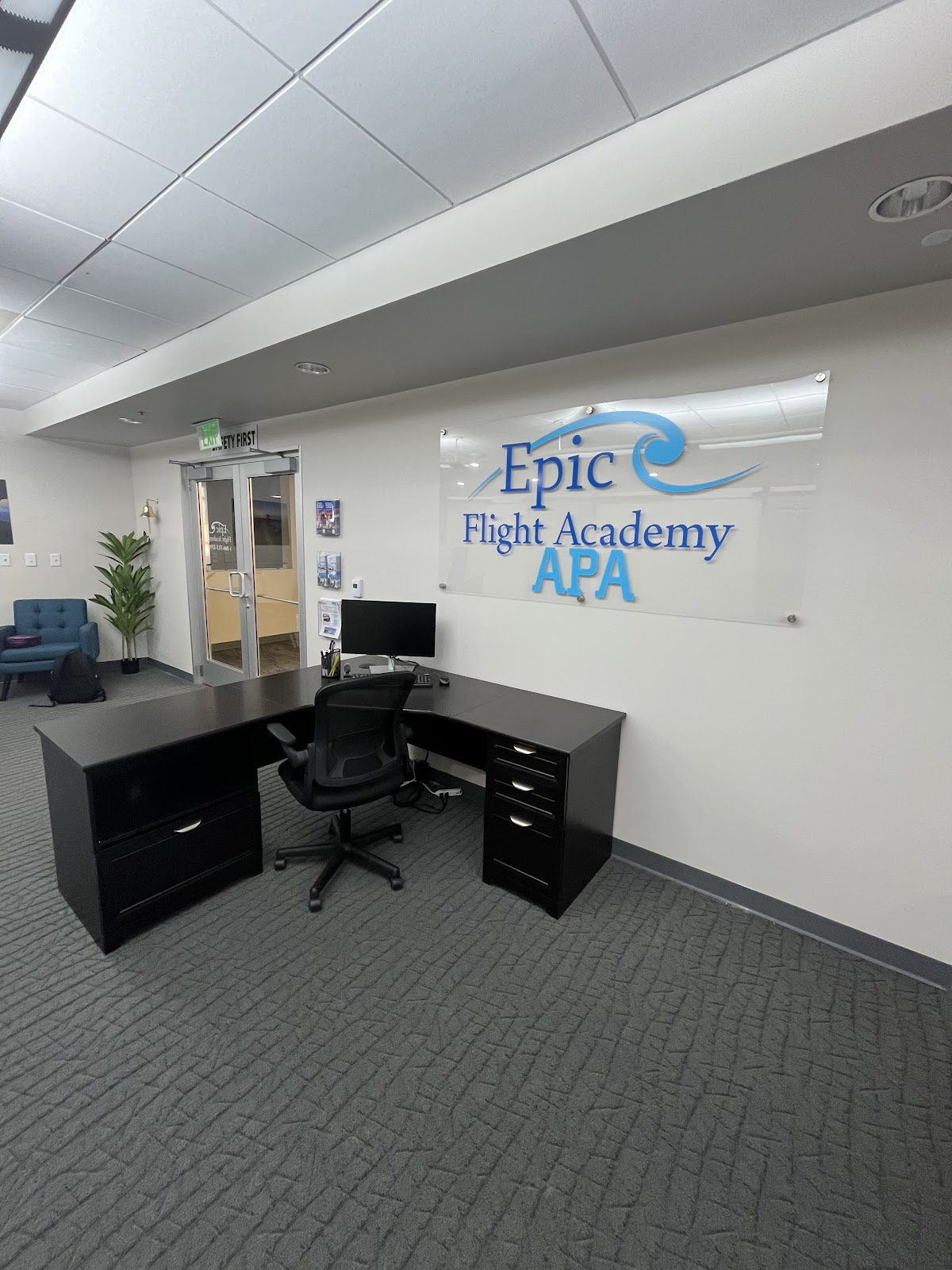
Epic Flight Academy opened its Centennial Airport campus in June 2025, making it the newest flight school on this field by a wide margin. The parent academy is not new. Epic has been training pilots in Florida since 1999, has taken students from more than 110 countries, and counts alumni flying for more than 300 airlines. Interport Boulevard is a satellite of that operation, running the same FAA-approved Part 141 curriculum.
What Part 141 Actually Changes
Epic is explicit about being a Part 141 school, and that is a structural difference rather than a marketing badge.
Under Part 141 the FAA approves the syllabus itself. Lessons run in a fixed sequence, stage checks land at defined points, a chief instructor is accountable for the whole program, and the school gets audited on it. The visible benefit is lower regulatory minimums. The less visible benefit is that nothing quietly gets skipped, because the syllabus is not the instructor's to rearrange on a slow afternoon.
The cost is rigidity. Miss six weeks and you may repeat material a Part 61 instructor would have simply picked back up. Part 141 rewards students who show up constantly and penalizes students who cannot.
| Factor | Part 141 (Epic) | Part 61 |
|---|---|---|
| Private pilot minimum | 35 hours | 40 hours |
| Syllabus | FAA-approved, fixed sequence | Instructor discretion within required tasks |
| Stage checks | Required at defined points | Not mandated |
| Non-immigrant student enrollment | Supported | Not available |
| Best suited to | Full-time, fixed schedules | Irregular schedules, working adults |
That last row about enrollment is not a small detail. Part 141 approval is what lets a school take international students on the appropriate non-immigrant visa, and it also matters for certain financing structures and benefit programs that require an approved course.
Aircraft and Simulator
Cessna 172s with G1000 glass panels, plus an Advanced Aviation Training Device on site.
Do not skip past that simulator. An AATD is loggable toward the instrument rating, and it is the most cost-effective hour in flight training by a wide margin. Approaches, holds, partial panel, and failure scenarios that are expensive or unsafe to practice in the airplane cost a fraction as much on the ground, and you can freeze the scenario mid-approach and talk through what just happened. Students who use sim time well finish the instrument rating noticeably cheaper than students who insist on doing everything in the air. Ask how many AATD hours the syllabus credits before you compare quotes.
The Programs
Epic runs the standard career sequence, with published rough timelines for each stage:
- Private pilot certificate, roughly three months full-time
- Instrument rating, roughly two months
- Commercial pilot, roughly two months
- Certificated flight instructor and instrument instructor
- ATP-CTP, the required course before the ATP written exam
Those numbers assume the full-time track: five days a week, up to two training activities per day. A part-time option exists, and the school recommends three to four sessions a week for it. That is honest advice. Below that cadence the timeline stretches far enough that review time starts eating the budget.
Financing is advertised at up to 100 percent of program cost. Price it against alternatives and read the terms carefully on what happens if you stop or wash out, because education debt behaves differently from a bill you pay per lesson.
The Centennial campus also flies students from the Metropolitan State University of Denver aviation program on a dedicated schedule. That is a reasonable signal of institutional confidence — degree programs do not casually attach their students to a brand-new operator.
Training at Altitude
A student who does primary training at Epic's Florida campus and one who does it at Centennial come out with different reflexes. If you are choosing between Epic locations, that difference is worth thinking about.
Centennial's field elevation is 5,885 feet. Summer afternoons push density altitude above 9,000 feet, which changes takeoff distance, climb rate, and true airspeed in ways that show up on every performance chart you will ever use. Learn here and those charts are never abstract. The field is Class D with three runways — 17L/35R at 10,001 feet, 17R/35L at 7,001 feet, and 10/28 at 4,800 feet — carrying heavy mixed traffic, so radio work and pattern discipline develop early instead of getting bolted on later.
There is a real tradeoff. Colorado weather cancels more lessons in winter than Florida weather does, and a full-time timeline built on daily flying is more exposed here. Ask directly how the Centennial campus tracks against the published timelines through January and February.
This campus opened in mid-2025, which means its local checkride pass rates, examiner relationships, and instructor retention are still establishing at this field. The parent academy's twenty-five-year record is not the same data. Ask for location-specific numbers: how many students have finished a private certificate here, what the current wait is for a designated pilot examiner, and how many instructors are on staff today.
Who It Fits
Career-track students who want an approved syllabus, a published timeline, and financing from one source. International students, for whom Part 141 approval is not optional. And MSU Denver students already routed here.
It fits poorly if you are a weekend recreational pilot with an unpredictable calendar. The same structure that makes Part 141 efficient for full-time students works against you when you can only fly when life allows. For that, the Part 61 operations elsewhere on this field are the better match.
What Visitors Say
Pulled from Google reviews, unedited. We do not moderate or curate these — they are what the public left.
★★★★★ 11 months agoHaving been to a few flight schools throughout my flying career (part 61 and 141), Epic has incredible to work with. Great communication, expectation setting, quality of instruction, and plane maintenance. They hold their planes to a very high standard in terms of maintenance and it’s great to know I don’t have to worry about cut corners. Highly recommend if you want to learn to fly!
Katie Naudin
★★★★★ a month agoWe had a wonderful experience at Epic, for a discovery flight with my teen. Noah H. Was super friendly and knowledgeable. Book it! It’s definitely worth it- very cool experience.
Jen Longshore
★★★★★ 7 months agoI am just about to begin my training with Epic, but the process has been incredibly smooth thanks to Kayla Aveille, who has made the process seamless. I also had an incredible discovery flight with Dylan Slatinsky out of KAPA, who was very knowledgeable and guided me through a discovery flight with them.
Jack Nance