
★★★★★Jean was so welcoming, professional, called me back though i didn't leave a message, checked the inventory and confirmed before I drove over to get the item. She has had the shop for 30 years and she was very honest with items. Kudos to you Jean!!!
★★★★★Jean is the best! She has a great selection of everything you could possibly need or want as a pilot. It’s also conveniently located at the Centennial Airport. Love this shop! Thanks for all the help Jean!
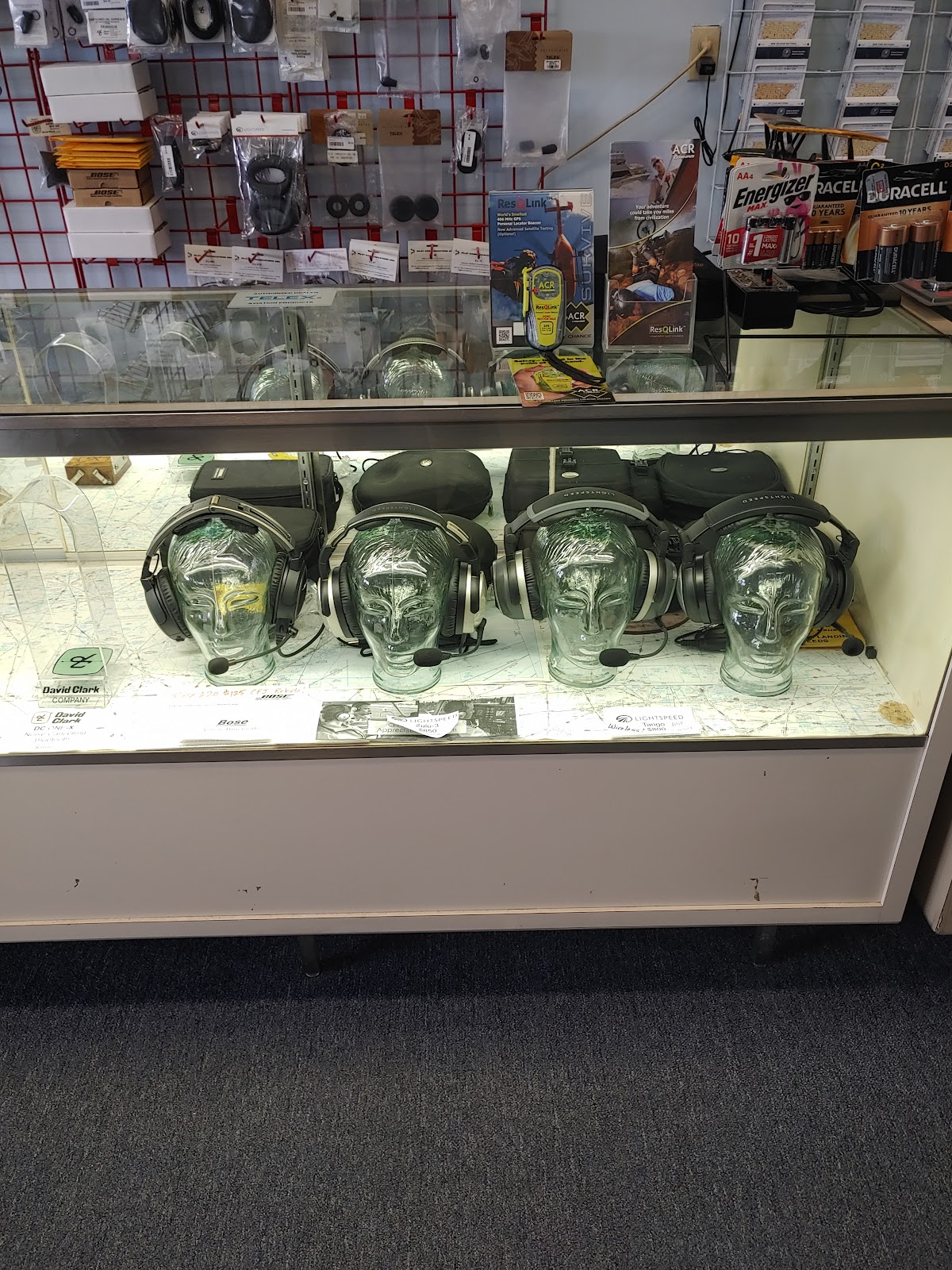
★★★★★Great aircraft supply store Came here to get a headset since I’m wanting to become a private pilot and the owner was very helpful. I also bought a little briefcase for it as well. I definitely will be coming back to see what else is here especially since they sell hot wings diecast planes and I like collecting those along with any flight …
Hours
- Monday: 9:00 AM – 5:30 PM
- Tuesday: 9:00 AM – 5:30 PM
- Wednesday: 9:00 AM – 5:30 PM
- Thursday: 9:00 AM – 5:30 PM
- Friday: 9:00 AM – 5:30 PM
- Saturday: 9:00 AM – 3:00 PM
- Sunday: 10:00 AM – 2:00 PM
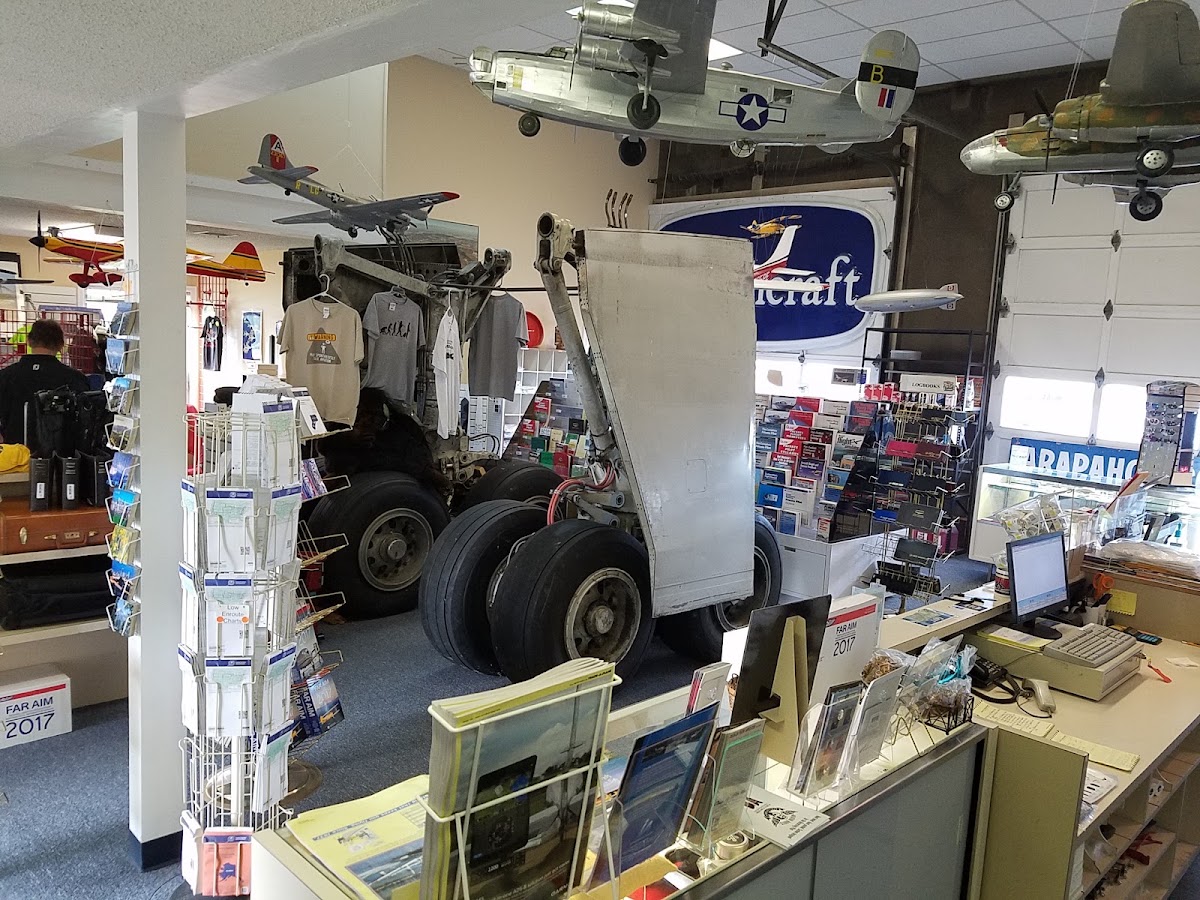
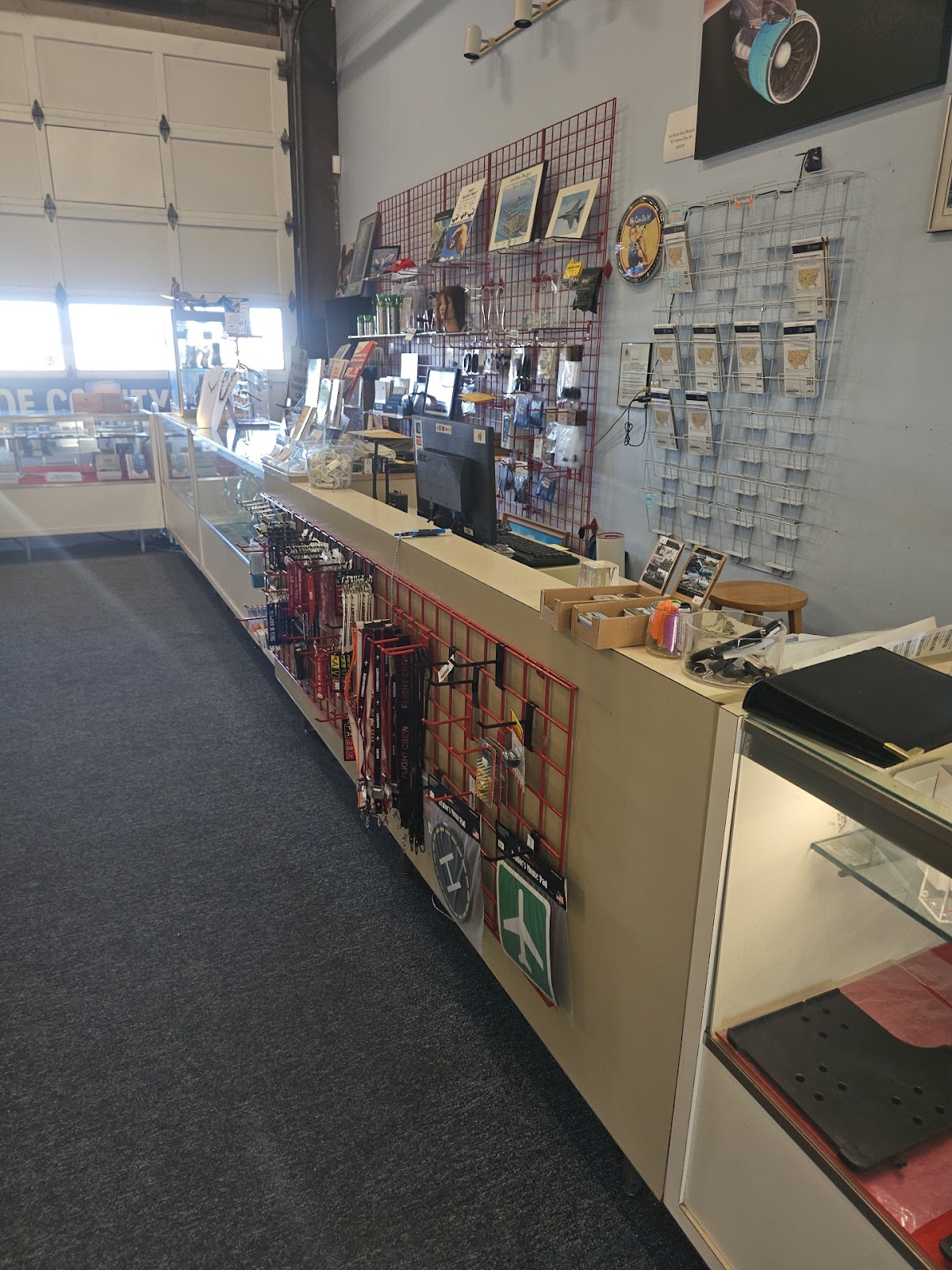
Centennial Airport has an on-field pilot supply store, The Pilot Shop, at 7601 S Peoria St in Englewood. It's the kind of store most busy training airports eventually grow: a physical place to walk in, hold a headset before you buy it, or replace a dead handheld the morning of a flight instead of waiting three days for shipping.
Visit Information
| Item | Details |
|---|---|
| Address | 7601 S Peoria St, Englewood, CO |
| Phone | (303) 706-9000 |
| Hours | Monday through Friday, 9:00am to 5:00pm |
What a Pilot Shop Like This Carries
Stores in this category tend to organize around a handful of categories that cover most of what a working pilot or student needs:
| Category | Examples |
|---|---|
| Headsets | Active noise-reduction and passive models across a range of price points |
| Charts and publications | Sectional charts, approach plate subscriptions, and chart supplements |
| Flight bags and cases | Bags sized for students up through crew-level kits |
| Handheld radios | Backup and primary handheld nav/com units |
| ADS-B and GPS accessories | Portable receivers, mounts, cables, and related hardware |
| Checkride and CFI gifts | Logbooks, plaques, and small gear aimed at milestones |
| Apparel | Hats, jackets, and other flight-themed clothing |
Why It's Useful to Have One on the Field
A lot of pilot gear can be bought online for less, and plenty of pilots do exactly that. What an on-field shop offers is immediacy. If a headset cable fails an hour before a lesson, or a student needs a current chart before a cross-country, driving across town isn't an option, but walking into a shop on the same airport is. Flight schools and based renters at KAPA also benefit from being able to browse gear in person rather than guessing at fit and sound quality from a product listing.
Trying on a headset before you buy it matters more than it sounds like it should. Clamping pressure, ear cup size, and how a boom mic sits relative to your mouth are all things a product page can't tell you, and a bad fit on a $700 headset is an expensive mistake to make sight unseen. The same goes for flight bags, where the difference between a bag that fits your kneeboard, charts, and handheld radio comfortably and one that doesn't is easier to judge by loading it up in person.
Who Tends to Use It
An on-field shop like this one draws a mix of regulars. Students working through a training program need current charts and a first headset. CFIs shop for checkride gifts for the students they've just signed off. Renters and based owners drop in between flights for small items they'd otherwise forget to order ahead of time. Transient pilots passing through occasionally stop in for a replacement part or a chart they didn't realize was out of date until they were already on the ramp.
Planning a Visit
Because the store keeps standard weekday business hours and is closed on weekends, it's worth building a stop around those hours rather than assuming it'll be open whenever you happen to land. If you're flying in specifically to shop, a call ahead confirms both the current hours and whether a specific item is in stock, since retail inventory for specialty gear like handheld radios or particular headset models can shift.
Buying Online vs. Buying On the Field
Neither option is universally right, and most pilots end up using both depending on what they need.
| Factor | Online Retailer | On-Field Shop |
|---|---|---|
| Price | Often lower, especially with sales or bundles | Competitive but rarely the absolute lowest price |
| Speed | Days, even with expedited shipping | Immediate, same day |
| Try before you buy | Not possible; fit and sound are a gamble | You can put the headset on or load the bag before paying |
| Returns and exchanges | Mail-back process, can take a week or more | Handled in person, often on the spot |
| Selection depth | Effectively unlimited across brands | Curated to what fits the local training and owner market |
A useful rule of thumb: buy known, low-risk replacement items online if the price difference is meaningful and you're not in a hurry. Buy anything you need to try on, anything time-sensitive, or anything you're unsure about the fit or spec of, from a shop you can walk into.
A Familiar Scenario: The Night-Before Failure
This kind of problem shows up at training airports often enough that it's worth planning for rather than treating as bad luck. A student's headset cable frays the night before a checkride, or a handheld radio's battery finally gives out the morning of a cross-country. Overnight shipping from an online retailer usually can't beat a same-day deadline like that, and driving to a big-box store an hour away eats into prep time that was already tight.
The workable fix, when it's a weekday, is the on-field shop: it opens at 9am, the item is in hand by 9:15, and the flight or checkride proceeds on schedule. The harder version of this problem is when the failure happens on a Friday night or over a weekend, since the shop is closed until Monday. In that case the realistic options narrow to a courtesy loaner from a flight school, a rental unit from an FBO if one's available, or a rebooked checkride, none of which are things you want to be sorting out for the first time under time pressure. The lesson generalizes past this specific shop: know your backup plan for critical gear before the failure happens, not after.
Deciding When and How to Shop
A simple way to decide between calling ahead, walking in, or ordering online:
- If you need the item today and it's a weekday during business hours, walk in or call first to confirm stock, then drive over.
- If it's a weekend and the need isn't truly urgent, wait until Monday rather than assuming a workaround will be smoother; the shop's selection is hard to substitute for on short notice elsewhere.
- If you're buying your first headset or a bag you've never used, go in person if you can, even if it costs a bit more, since fit problems are expensive to discover after the return window closes.
- If you're replacing a known model you've owned before and price is the deciding factor, ordering online is usually fine, since you already know how it fits and sounds.
Clamping pressure, ear cup depth, and boom mic position vary enough between headset models that two units with near-identical noise-reduction specs can feel completely different after two hours in the air. If you're buying your first headset, or switching brands, try it on before you pay rather than trusting a product page or a friend's recommendation alone.
Bottom line: An on-field shop like this one isn't trying to out-discount the internet, and it doesn't need to. Its value is being open, stocked, and walkable on the same field where the problem shows up. Use it for anything urgent, anything you need to try on, and anything where getting the fit wrong would be an expensive mistake, and save routine restocking for whichever channel is cheapest that week.