
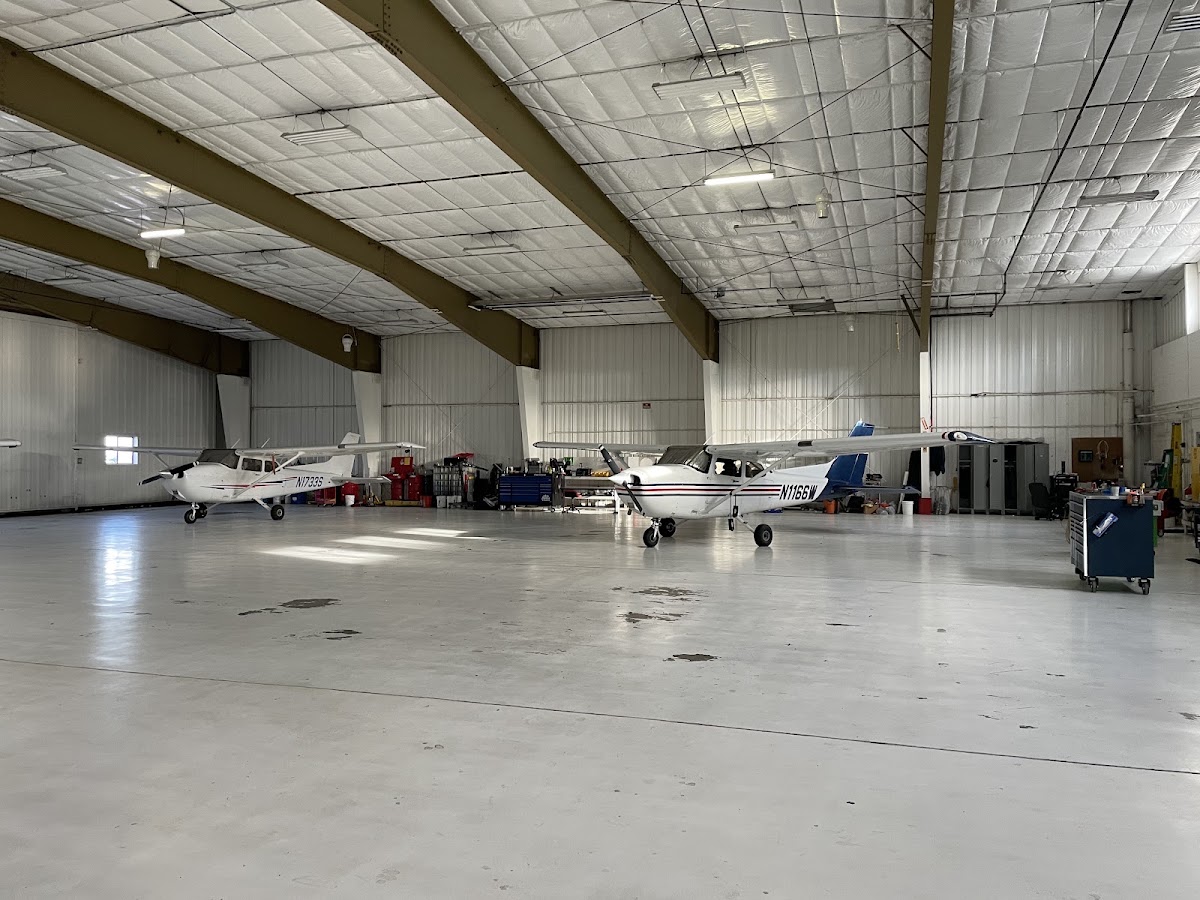
ATP is not a local flight school that happens to sit at Centennial. It is a national training company running the same curriculum out of dozens of hangars around the country, and Hangar 7 on South Peoria Street is one node in that network. Almost everything worth knowing about training here follows from that one fact.
The premise is straightforward. Take someone with no flight time, move them to a commercial multi-engine certificate with instructor ratings in roughly nine months, at a price agreed to before the first lesson. Graduates typically stay on as ATP instructors to build toward the 1,500 hours an ATP certificate requires, then step into a regional or major carrier through a partner agreement. That sequence is standard across the industry. What ATP has built around it is scale, standardization, and a set of airline relationships that a single-hangar operation cannot match.
Published Pricing and What It Buys
Fixed-cost pricing is unusual in flight training, and it is the strongest single argument for looking hard at ATP. Most schools quote an hourly rate, an estimated hour count, and then let reality drift upward while the student absorbs the difference. ATP quotes a number for the whole program. Published figures for the Denver location:
| Entry point | Published program cost | Timeline |
|---|---|---|
| Zero flight time | $123,995 | About 9 months |
| With solo credit | $100,995 | About 7 months |
| Holding a private pilot certificate | $90,995 | About 6 months |
Each entry point carries an additional training center premium of $2,000 at this location. Treat all of these as planning numbers rather than quotes — ATP revises published pricing, and admissions is the authority on what applies to you.
If a lump-sum commitment is not workable, ATP also runs a Flex Commercial Pilot Program that unbundles the same training and bills as you go:
- Essentials Pass covering the ground curriculum, materials, and test prep: $995 per month
- Flight instruction: $400 to $425 per hour
- Advanced simulator: $180 to $185 per hour
- Ground instruction: $90 to $95 per hour
Flex works out more expensive per hour than the packaged program does on average. That is the trade. You keep control of your schedule and your cash flow, and you give up the ceiling on total cost. Financing is available through Sallie Mae for either route, which is worth pricing against a credit union loan or a home equity line before you sign anything.
Career Track Agreements
ATP holds pathway agreements with American, Delta, and United, plus a long list of regional carriers. Read them carefully. A pathway agreement is a structured relationship — defined interview timing, mentorship, sometimes tuition reimbursement or a conditional offer that activates once you hit hour and experience gates. It is not a job guarantee, and it does not survive a hiring downturn intact. Hiring cycles in this business swing hard, and a program that looked like a conveyor belt one year can look like a queue the next.
What the agreements do provide reliably is visibility. Airline recruiters know the ATP curriculum, know what a graduate has been trained to, and do not have to guess at the quality of a syllabus they have never seen. For a career changer with no aviation network, that recognition has real value.
Fleet and Standardization
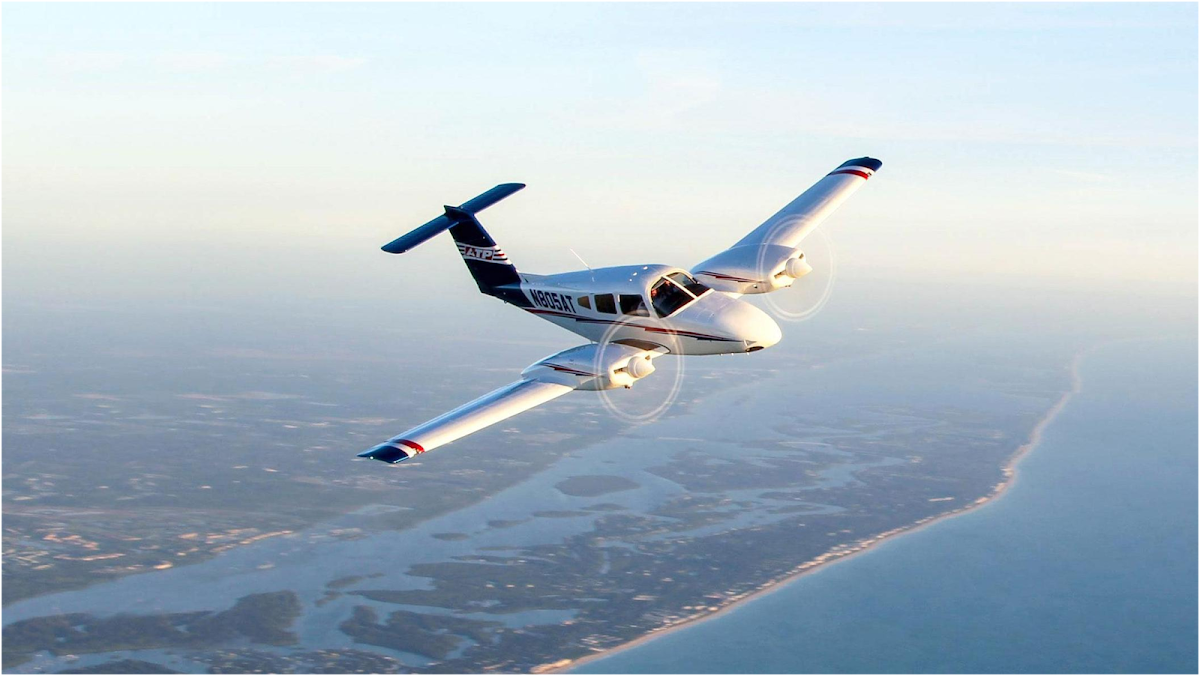
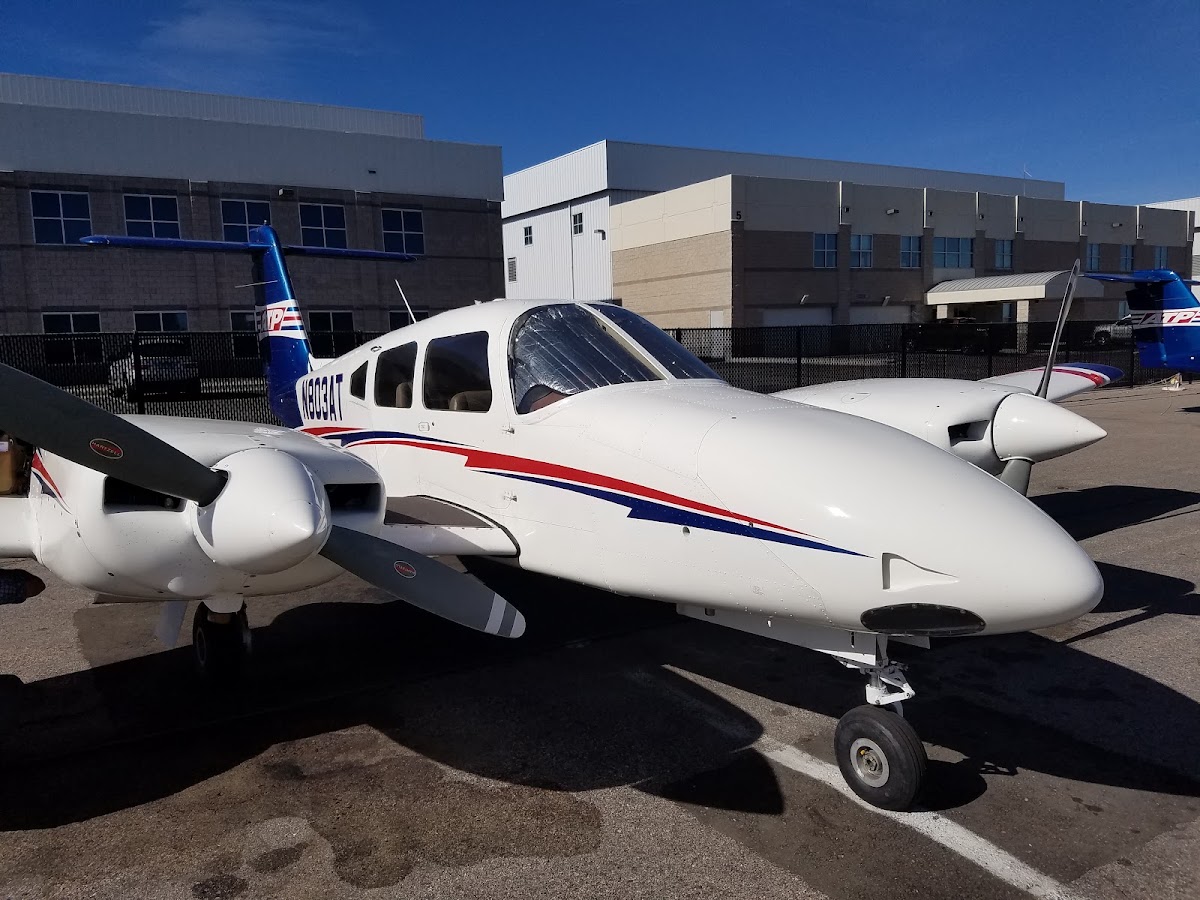
Piper Archers and Cessna 172s for primary and instrument work, Piper Seminoles for the multi-engine phase.
The airplanes matter less than the sameness of them. ATP flies a fleet of roughly 650 aircraft across its network, maintained to one standard and configured to one panel layout per type. A student who starts at Centennial and finishes a phase somewhere else steps into a cockpit they already know. Instructors teach one flow, one set of callouts, one checklist. That uniformity is the entire point of the operation, and it is the clearest difference between ATP and the independent schools down the row, where two Cessna 172s in the same hangar might have completely different panels.
The flip side is that you fly what the program assigns. If you wanted a tailwheel endorsement, time in a Cirrus, or an afternoon poking around a Bonanza, this is the wrong hangar.
What Centennial Adds
Centennial is a serious training environment, and the location does real work in the curriculum.
The field sits at 5,885 feet. On a hot July afternoon the density altitude at KAPA regularly climbs past 9,000 feet, which means the airplane you flew at 7 a.m. is a materially different airplane at 3 p.m. Less power, less thrust, longer ground roll, flatter climb. Students who learn here do performance planning as a habit rather than as a checkride formality, because the numbers actually bite. Anyone who trains at Centennial and later flies out of Aspen, Leadville, or Telluride arrives with the right instincts already installed.
The tower is Class D and it is busy. Three runways — 17L/35R at 10,001 feet, 17R/35L at 7,001 feet, and 10/28 at 4,800 feet — combined with heavy general aviation and business jet traffic means students sequence with other airplanes and talk to controllers early in primary training. That is not a small thing. Radio hesitancy is one of the most common weak spots in newly certificated pilots, and it does not develop in someone who logged forty hours at a quiet uncontrolled field.
Ask specifically how many aircraft are based at the Centennial location, not how many ATP operates nationally. Fleet totals are network-wide. What matters to your timeline is how many airplanes sit on this ramp in July and how many students are competing for them. Ask the same question about instructor staffing, and ask what the current wait is for a designated pilot examiner at this field.
Who Should Train Here
ATP fits a specific person: someone who can stop working, commit to full-time training, and wants an airline seat as fast as the regulations allow. If that describes you, the fixed price, the standardized fleet, and the airline relationships are hard to beat anywhere on this field.
It fits poorly if you are learning to fly for its own sake, if you need to train around a job, or if you want one instructor who knows your name and your weak spots over the course of two years. The independent operators at Centennial do that better, cheaper, and with more patience. ATP is a pipeline. Get in it only if the destination is the reason you came.
What Visitors Say
Pulled from Google reviews, unedited. We do not moderate or curate these — they are what the public left.
★★★★★ 7 months agoIs ATP extremely hard? Yes. Is ATP perfect? No. My experience with ATP was exactly what I expected. I worked hard 7 days a week in school as well as at another job and on top of that I have a 3 year old and an infant born 4 months into my training. It is hard but very possible to make the advertised timeline. I was told 12 months zero to hero and managed to do it in 9. Anything is possible if you are willing to pu...
Jake Nuttall
★☆☆☆☆ 3 months agoFlight instructors must live near Ken Caryl, Columbine, Chatfield area, since they like to fly 1000' AGL and circle at 6am. And now with schools at APA and BJC it is endless along the 470 corridor. 0 regards for the community.
Tim Cooper
★☆☆☆☆ 5 months agoI’ve never seen such unprofessional flight instructors. Totally unethical behavior. Think twice before enrolling in this boys club of inexperienced instructor pilots. I ran American flyers in Chicago for many years and have seen good and bad instructors.
Thomas Chapetta