
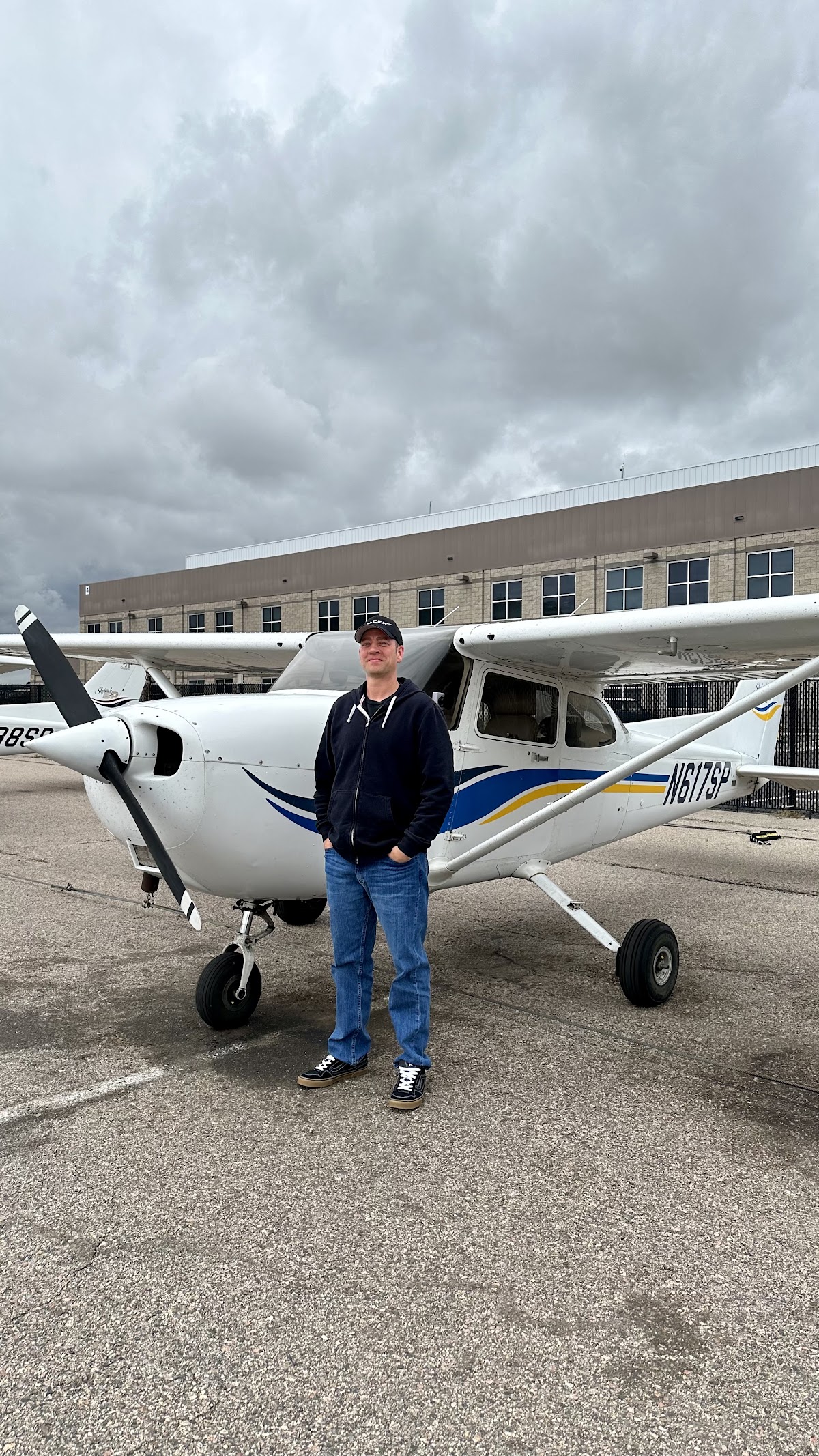

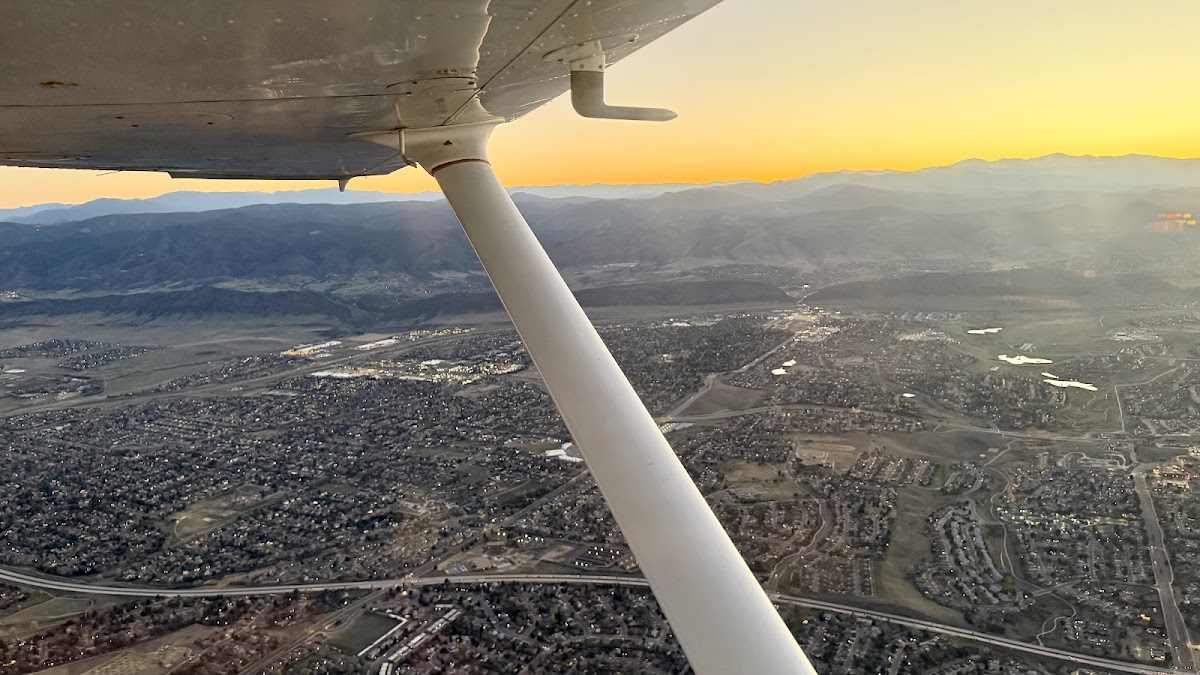
Colorado's BEST Flight School is an instruction business, not a fleet operator. It works out of the same Peoria Street hangar complex as the Flights Inc club, contracts independently for access to that club's seventeen fuel-injected aircraft, and sells one thing: instruction, by the hour, paid as you go. Understanding that structure explains most of what follows.
The Pay-As-You-Go Model
No packages. No prepaid blocks. No contract locking your tuition to a timeline you may not be able to keep.
This is the oldest arrangement in flight training and it is still the right one for a large share of students. You pay for the airplane and the instructor for the lesson you just flew. If work gets busy, you stop. If a month of weather wrecks your schedule, you have lost nothing but momentum. And critically, no school is sitting on several thousand dollars of your money in an account you cannot easily get back — a risk that stops being theoretical every time a flight school closes without warning, which happens more often than the industry likes to talk about.
The trade is the absence of a ceiling. A fixed-price program tells you the worst case up front. Pay-as-you-go does not, and students who train irregularly will log more total hours than students who fly three times a week, because every long gap costs review time. If you pick this model, protect your frequency. Two lessons a week beats four lessons a month at the same monthly spend.
Start With the Discovery Flight
An hour in the airplane. Roughly $170 for the aircraft plus $70 for the instructor, no medical certificate required, no advance paperwork, and you fly as much or as little of the hour as you want. Verify current pricing when you call.
Do this before anything else. Not after buying a headset, not after starting ground school, and definitely not after committing to a training budget. A discovery flight answers the only question that matters at the start: do you actually like it up there? Some people find out they get airsick. Some find the workload feels like drowning. Some find the view stops being interesting after twenty minutes. Better to spend a couple hundred dollars learning that than twelve thousand.
How the Program Runs
The sequence here is conventional in the best sense, and it is laid out clearly enough that you can plan against it:
- Discovery flight, no prerequisites
- Student pilot certificate through IACRA
- Medical certificate — third class before solo if you are flying for yourself, first class early if you are aiming at a career
- Private pilot ground school through Gold Seal, with instructor support
- FAA knowledge test, passed before you get deep into the expensive flying
- Flight training through the private pilot practical test
- Instrument rating, then commercial, for students continuing on
That medical advice is worth repeating because a lot of schools bury it. If you intend to fly professionally, get the first class medical early. It is the same standard you will face for the rest of your career, and discovering a disqualifying condition after spending forty thousand dollars is a specific and avoidable kind of disaster. The school points students toward MedXPress and an aviation medical examiner up front. Take that seriously.
Aircraft scheduling runs through Flight Schedule Pro, the industry-standard system, so you can see availability yourself instead of calling a dispatcher and waiting.
The Fleet You Fly
Seventeen aircraft, fuel-injected, reached through the Flights-Inc club rather than owned by the school.
Fuel injection is not a marketing detail at this field. Carbureted engines are the ones that pick up induction icing on a cool descent, and injected engines remove that failure mode entirely. The other side of the coin is hot-start technique, which is a real skill you will have to learn, and you will learn it on a July afternoon at 5,885 feet with a hot cowling and a line of airplanes behind you. Ask your instructor to teach it properly the first time rather than cranking until something catches.
| Rating | Part 61 minimum | What it lets you do |
|---|---|---|
| Private Pilot | 40 hours total, 20 dual, 10 solo | Carry passengers, day or night, VFR |
| Instrument Rating | 50 hours PIC cross-country, 40 hours instrument time | File and fly IFR, including in cloud |
| Commercial Pilot | 250 hours total | Be paid to fly |
Those are floors, not forecasts. The national average for a private certificate lands closer to 60 or 70 hours, and students flying once a week land higher still. Any school quoting the regulatory minimum as an estimate is selling, not planning.
Because this school contracts into a shared club fleet rather than owning airplanes, your scheduling competition includes every renter and student in the same hangar. Summer weekend mornings — the only window where density altitude is reasonable and the afternoon storms have not built — go first. Students who book two weeks out consistently fly more than students who call on Thursday hoping for Saturday.
Who It Fits
Career changers training around a job, recreational pilots with no deadline, and anybody who wants a named instructor rather than a rotation. A small operation carrying a five-star record across nineteen reviews is telling you something specific: the students who came through it know their instructor by name and were willing to say so in public.
It is the wrong fit if you need an accelerated, financed, airline-pipeline product with a partner-carrier agreement attached. That exists at Centennial. It just is not this. It is also worth asking directly about instructor availability before you commit, because in a small operation the binding constraint is rarely the airplane. It is the person in the right seat.
What Visitors Say
Pulled from Google reviews, unedited. We do not moderate or curate these — they are what the public left.
★★★★★ 4 months agoI had an awesome experience flying this weekend with Travis as my instructor. He was extremely knowledgeable, patient, and made the whole process feel comfortable and fun. He did a great job explaining everything in a way that was easy to understand, and you can tell he genuinely enjoys teaching and flying. What stood out most was how calm and confident he was throughout the flight, which made it easy to relax an...
Heath McCoy
★★★★★ 6 months agoTravis helped me get current again after taking 20+ years off from flying. He’s a very knowledgeable and competent instructor!
Kelly Martin
★★★★★ a month agoHad our discovery flight and Travis is great! He was communicative and helpful through the process. My son is excited to continue his flight journey with Travis.
Diana M