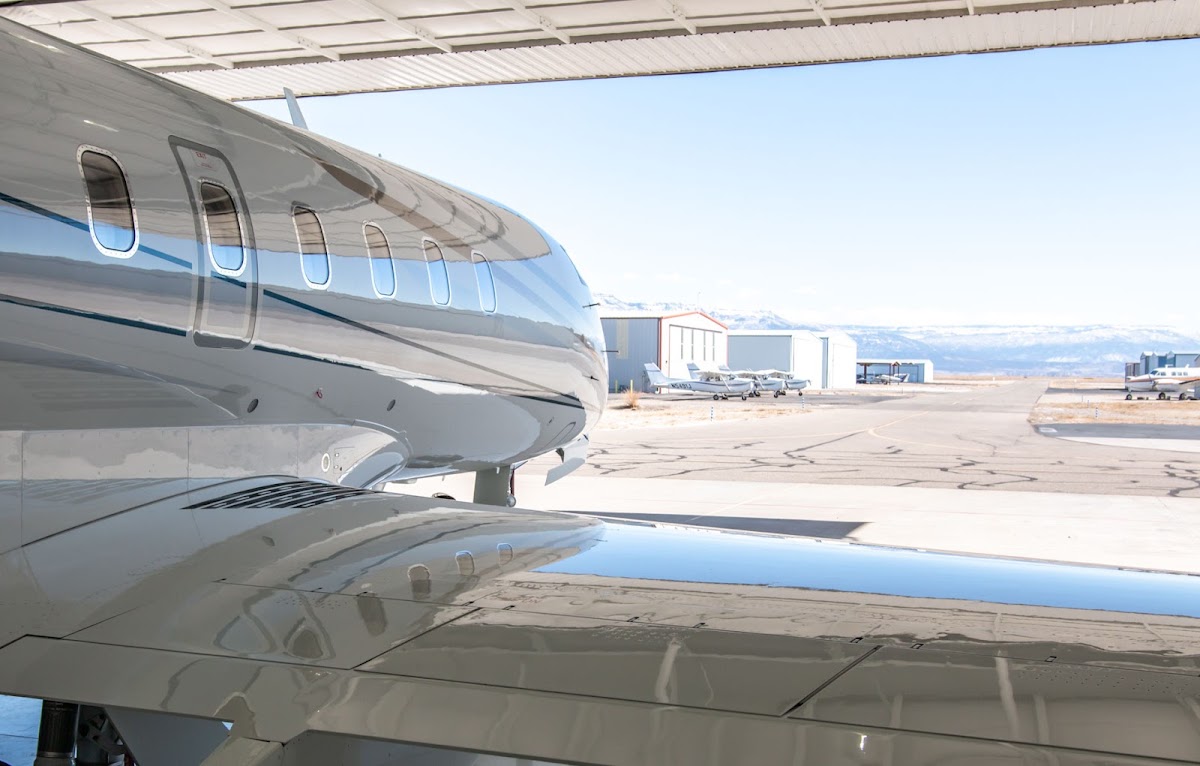
Top Flight Detailing has been washing and protecting airplanes at Centennial Airport since 1999, long enough to have developed its own branded process rather than reselling a generic ceramic coating product off the shelf. Their technicians are certified specifically in what they call TFS Aviation detailing, built around a titanium paint sealant and ceramic coating system aimed at paint restoration and long-term protection rather than a one-time wash.
What They Actually Do
The core service is paint correction and protection: cutting oxidation and light damage out of aging paint, then sealing it with a coating meant to hold up against fuel spills, exhaust staining, and UV exposure better than wax. This is the kind of work that matters most on an aircraft that lives outside on a ramp rather than in a hangar, where paint takes a real beating from Colorado sun and weather.
Who This Fits
Owners planning to keep an aircraft for years rather than flip it are the best fit for a full ceramic coating job - it is a bigger upfront job than a wash, but it changes how often the airplane needs full detailing afterward. It is also a reasonable pre-sale investment if paint condition is doing real work in what a buyer is willing to pay.
A ceramic coating job is not a same-day wash-and-go - expect the aircraft to be down for the full detailing and cure process. Book it around a maintenance visit or a stretch you were not planning to fly anyway rather than losing a flying day specifically for it.
What Ceramic Coating Actually Protects Against
At altitude and on the ramp, aircraft paint deals with a harsher mix of stress than a car ever sees: intense UV exposure at higher elevations and thinner atmosphere, exhaust and oil staining streaking back from the cowling, de-ice fluid, and fuel spills during hot refueling. A wax layer breaks down against that combination in weeks. A ceramic coating forms a harder, more chemically resistant bond to the paint that sheds those contaminants instead of letting them etch in, which is why the pitch is fewer full corrections over the life of the paint rather than a one-time cosmetic upgrade. Denver's elevation and intense high-altitude sun make this more relevant here than it would be for the same aircraft based at sea level, where UV exposure is measurably lower.
| Protection | Typical Lifespan | Resistance to Fuel/Exhaust Staining |
|---|---|---|
| Wax | Weeks to a couple months outdoors | Low; breaks down quickly under UV and chemical exposure |
| Ceramic coating | Multiple years with proper maintenance | High; forms a harder bonded layer that sheds contaminants |
Why Surface Prep Matters More Than the Coating Itself
Any ceramic coating is only as good as the surface it bonds to. A rushed prep that skips decontamination, mechanical paint correction, and a proper panel wipe-down before the coating goes on leaves contaminants sealed under the coating instead of removed from it, which shows up later as trapped staining or uneven gloss that a wash alone will not fix. The prep work, cutting oxidation, removing embedded contamination, and correcting swirl marks before any protective layer goes on, is what actually determines how the finished job looks and how long it lasts, more than the specific coating product used on top of it. That is also why a full ceramic coating job takes real time rather than a same-day turnaround: the prep work alone, done properly on an aircraft that has not been corrected in years, can take longer than applying the coating itself.
Wax, Correction, or Full Ceramic Coating
If the paint is in decent shape and the aircraft lives in a hangar most of the time, a standard wash and wax on a routine schedule is probably enough. If the paint has visible oxidation, staining, or has not been corrected in years, a paint correction pass before any coating goes on is what actually restores the surface rather than sealing in existing damage. If the aircraft lives outside on the ramp year-round, especially at altitude where UV exposure is more intense, ceramic coating is the option that meaningfully changes how often the airplane needs a full detailing cycle rather than just looking good for a few weeks after a wash.
Bottom Line
Top Flight's ceramic coating work is a bigger upfront commitment than a routine wash, and it is meant to be. For an aircraft that spends its life outside in Colorado sun, that trade generally pays off in fewer full paint corrections over the years the aircraft is owned.
What Visitors Say
Pulled from Google reviews, unedited. We do not moderate or curate these — they are what the public left.
★★★★★ 2 months agoYou can never go wrong with Topflight Detailing 🔥! Nick did an excellent work on my 2019 Tahoe from inside to outside feels like I bought a new car .I can’t wait to do another service with him again.
Levin Kyle Ellarina
★★★★★ 4 months agoNick detailed both my husband’s car and mine and did such a great job! My car was covered in dog hair and he somehow got it all out, which I didn’t even think was possible. Everything is spotless! Definitely recommend!
Casey Ziegler
★★★★★ 5 months agoNick is a true professional. His attention to detail is unparalleled. I never fear damage, careless mistakes, or missed cleaning. I’ve had many Detailers. Currently, I only trust Nick with Top Flight!
Steven Gonzalez